Share David Henry Johnson's obituary with others.
Invite friends and family to read the obituary and add memories.
Stay updated
We'll notify you when service details or new memories are added.
You're now following this obituary
We'll email you when there are updates.
Select your format and elements to print
IN LOVING MEMORY OF David Henry Johnson
David Henry
Johnson
Dec 19, 1935 — Apr 21, 2026
David Henry Johnson's Obituary
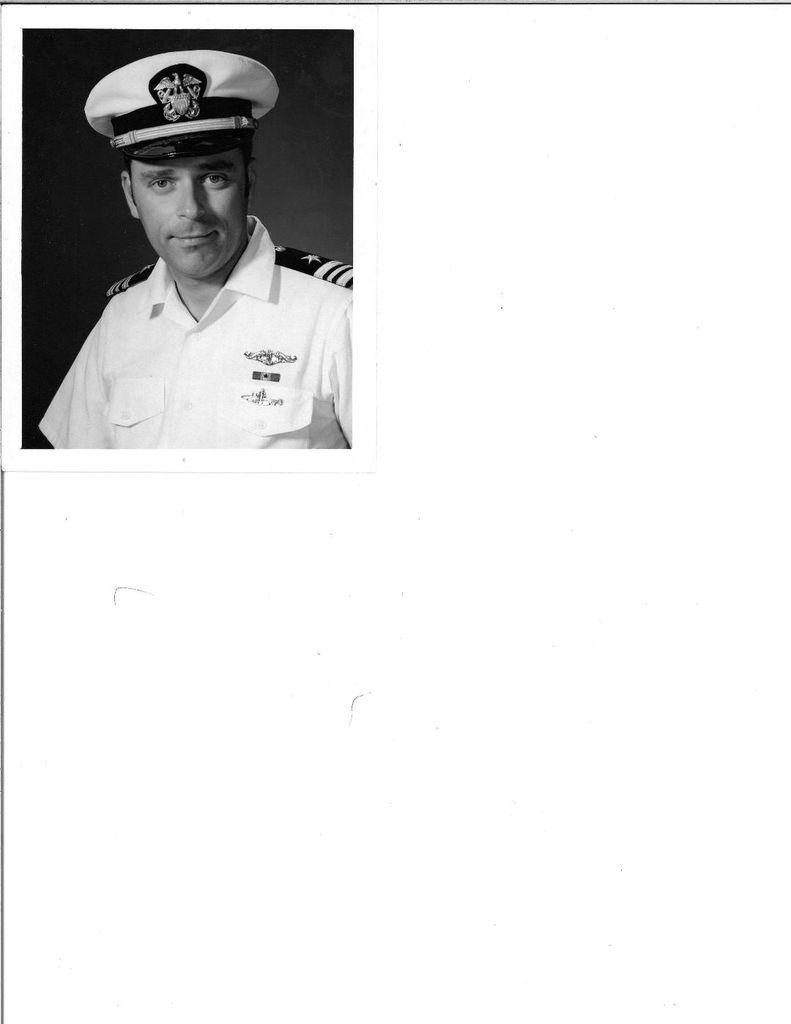
CDR David Henry Johnson, U.S. Navy (Retired), went home to be with his Lord on 21 April 2026. CDR Johnson was born in Nashville, Tennessee on December 19, 1935, where he lived for 18 years. He was the son of Clarence F. Johnson Sr. and Anna Katherine (Williamson) Johnson of Nashville, Tennessee. David attended Hillsboro High School where he excelled in academics, varsity basketball, varsity golf and held positions in honorary societies and class leadership positions. He was a member of Kappi Phi Fraternity.
Upon graduation from Hillsboro in 1954, he received a Congressional appointment as a Midshipman to the United States Naval Academy (USNA) in Annapolis, MD, where he graduated with the Class of 1958. During his First Class (senior) year, Midshipman Johnson served in a leadership position as USNA Midshipman Commander of 24th Company. On graduation day, June 4, 1958, President Dwight David Eisenhower personally presented David his graduation diploma and his Commission as Ensign in the U.S Navy. Enroute to his first ship, USS Union (AKA-106), he attended the Navy's Amphibious Warfare School, followed by assignment to the USS Union (AKA-106) as Gunnery Officer. His tour abroad the USS Union included a brief shipyard overhaul in Mare Island Naval Shipyard and a 9-month deployment to the West Pacific with stops in the Philippines, several ports-of-call in Japan and 20 days as station ship in Hong Kong. Upon returning to his homeport and his qualifications as Officer-of-the-Deck, he entered the Navy Submarine School in New London, Connecticut. Upon graduating from the 6-month officer's submarine training, he served on the USS Picuda (SS-382) in Key West, where he earned the much-coveted gold dolphins as a qualified submarine officer. He was also promoted to the rank of Lieutenant (Junior Grade) (LTJG) on December 4, 1959. His tour on the Picuda included a shipyard overhaul in Charleston Naval Shipyard, operations out of Key West and long deployments operating in the Atlantic Ocean, Mediterranean Sea and ports-of-call in England, Spain, France and Portugal. After leaving the Picuda, David attended the US Navy Fleet Ballistic Missile (FBM) School in Dam Neck, Virginia, where he graduated No. 1 in his class and was assigned to the USS Patrick Heny (SSBN-599). Shortly after arriving on board, he was promoted to Lieutenant on June 1, 1962. David made several patrols as Fire Control Officer and Assistant Missile Officer on the Gold Crew. He was honored when the Navy selected him to attend Graduate School at Massachusetts Institute of Technology (MIT), commencing June 1964. While at MIT David received a promotion to the Lieutenant Commander (LCDR) on December 1, 1966. He went on to graduate with honors on June 9, 1967 and received two advanced degrees from MIT, a Master of Science in Naval Architecture and Marine Engineering, and a degree as Naval Engineer. To meet the Navy's need for engineers capable of performing ship salvage operations, the Navy assigned David to the Navy Deep Sea Diving and Ship Salvage School in June 1967 at the Washington Navy Yard. Upon completion of extensive studies and rigorous physical training and diving, he was designated "Qualified Ship Salvage Diving Officer" on August 30, 1967. David then reported for duty at the Charleston Naval Shipyard (CNSY) in September 1967, where as senior ship superintendent he planned, managed and supervised the complex overhauls and modernization of the ballistic missile submarines, James Monroe (SSBN-622} and USS Henry Clay (SSBN-625). In addition, he was also 6th Naval District Ship Salvage Officer. In June 1971 David reported for duty to the Staff of Commander Submarine Force Pacific (ComSubPac) as Material Officer, Nuclear Attack Submarines (SSN) and Force Quality Assurance Officer. On March 1, 1973, David was promoted to the rank of Commander. After four years of exemplary performance on ComSubPac Staff, the Navy assigned David to the USS Orion (AS-18) as Repair Officer in charge of the largest department on the ship that was responsible for repairs to all aspects of nuclear attack submarines. For his outstanding meritorious service as Repair Officer from June, 1975 to May, 1977, the Secretary of the Navy awarded David the Meritorious Service Medal on July 20, 1977. In addition, the high standards and superior performance of the Repair Department were instrumental in the USS Orion receiving the Battle Efficiency "E" award. In May 1977, David reported for duty to Commander, Charleston Naval Shipyard as Quality Assurance Officer responsible for all inspections and quality programs, nuclear and non-nuclear work. For his meritorious service as Quality Assurance Officer, Charleston Naval Shipyard from May 1977 through December 1978 the Secretary of the Navy awarded David the Navy Commendation Medal. While at CNSY, David attended after-hour college classes culminating in receiving a Masters of Art in Business and Management from Webster College, now Webster University, on July 28, 1978. After 24+ years of giving 100% every day to his Navy career, Cdr. Johnson retired on January 01, 1979 with pride in his superb performance and contributions to his country.
Upon leaving the Navy, David joined USPA & IRA, now "First Command". After studying and passing federal and state exams, he received his licenses to market investments and life insurance. He assisted military families in their financial planning and showed them how to set up long-range goals and means to achieve those financial goals. After one year as a financial planner, David joined the faculty of Trident Technical College in Charleston where he shared his extensive, engineering knowledge and expertise by teaching engineering to young high school graduates.
David moved to Atlanta, GA and joined the Institute of Nuclear Power Operations (INPO) to help promote the safe and reliable operations of commercial nuclear power for generation electricity. After 14 years as Department Manager and Team Manager for team evaluations of plants under construction and operations, David finally retired and moved to the mountains of Colorado where he and his wife Barbara opened and operated a Bed and Breakfast, Johnsons Rocky Mountain Retreat (JRMR). David finally found that in reality he was a mountain man at heart. He and Barbara loved dancing, tennis, biking, skiing, fishing (even if it meant boring through 24-30 inches of ice), and Arts & Crafts shows. David and Barbara lived at 9100 ft elevation for approximately 25 years. David admitted, with Barbara as his companion and wife, it was the best 25 years of his life where he developed deep roots in the Rocky Mountains.
Between 2010 and 2014 David and Barbara split their time between Colorado and Oklahoma. Barbara had deep roots in Oklahoma where her family had Chickasaw Indian heritage.
David leaves behind his beloved wife Barbara Huffman-Johnson just shy of 36 years of marriage. In addition, David has three sons from a previous marriage: Kevin David Johnson and wife Aprille; Craig Foster Johnson and Eric Mathew Johnson and wife Kristen. He leaves niece, Debora Snyder and husband Clint; nephews Clarence "Butch" F. Johnson III and Keith Johnson; brother-in-law, Donnel Somers, sisters-in-law, Lou Carlton and Audrey Herell.
David is preceded in death by his father, Clarence F. Johnson, Sr., mother Anna Katherine Johnson, brother Clarence F. Johnson, Jr., sister Barbara Robb, and step-daughter, Anjela Sexton-Johnson.
To send flowers with our preferred florist or plant a memorial tree, please visit our flower store.
Funeral Services for David Henry Johnson
Public Visitation

April
28
Tuesday
Wooster Funeral Home and Cremation Services (Pauls Valley)
9:00 am - 4:00 pm
Family Visitation with Friends
April
28
Tuesday
Wooster Funeral Home and Cremation Services (Pauls Valley)
4:00 - 7:00 pm
Funeral Service
April
29
Wednesday
Wooster Funeral Home Chapel
Starts at 11:00 am
David Henry Johnson's Guestbook
Visits: 0
This site is protected by reCAPTCHA and the
Google Privacy Policy and Terms of Service apply.
Service map data © OpenStreetMap contributors